Secure attachment in adulthood isn’t about constant closeness or needing reassurance—it’s about mutual trust and freedom to be yourself in a relationship. It’s the quiet self-esteem that you can rely on someone without losing your independence.
In this piece, we’ll look at what this adult attachment style looks like in real life, how it shapes our emotional patterns, and what it takes to build it—no matter your starting point.
I remember the moment I realized I had managed to form a secure attachment style in my daughter—and how happy the realization made me feel. She was three at the time, and we were at the park.
While my daughter was playing, something caught her eye—a nearby building that turned out to be a community center for kids. The door was open, and she looked back at me—curious, waiting for a signal. I gave a little nod, and she marched right in, poised and confident. She didn’t pull my hand or cling to my skirt—just checked in, then followed her own sense of adventure.
So, what’s the big deal, you might ask?
As a psychologist, I knew that moment spoke volumes. Her willingness to explore without fear—and her brief glance to make sure I was still there—meant she felt safe. She had a secure base with me. She knew I had her back if she needed it.
And this is a secure attachment in a nutshell.
Let’s unpack it further.
How Secure Attachment Style Looks In Real Life

Secure attachment is a pattern of relating to others that develops early in life and continues into adulthood—shaped by a child’s attachment to their primary caregiver. In adults, it shows up as confidence in close relationships, emotional balance, and the ability to express and regulate one’s own emotions.
While earlier studies suggested that more than half the population had secure attachment, more recent research places that number closer to 30%—meaning many of us didn’t start out with it. The good news? It’s possible to shift toward more secure patterns over time.
In everyday life, a securely attached adult welcomes intimacy without losing their sense of Self.
- They can enjoy being single as much as they cherish quality relationships.
- They share emotions openly, knowing they’ll be heard, not judged.
- When things don’t go according to plan, a securely attached person assumes goodwill—that there’s a good, justified reason behind it.
But what really sets secure attachment apart becomes clearest when we look at what it isn’t.
Secure Attachment vs. Insecure Attachment Styles
Understanding the four main attachment styles can help you recognize what it means to foster secure attachment—in yourself and in the relationships that matter most.
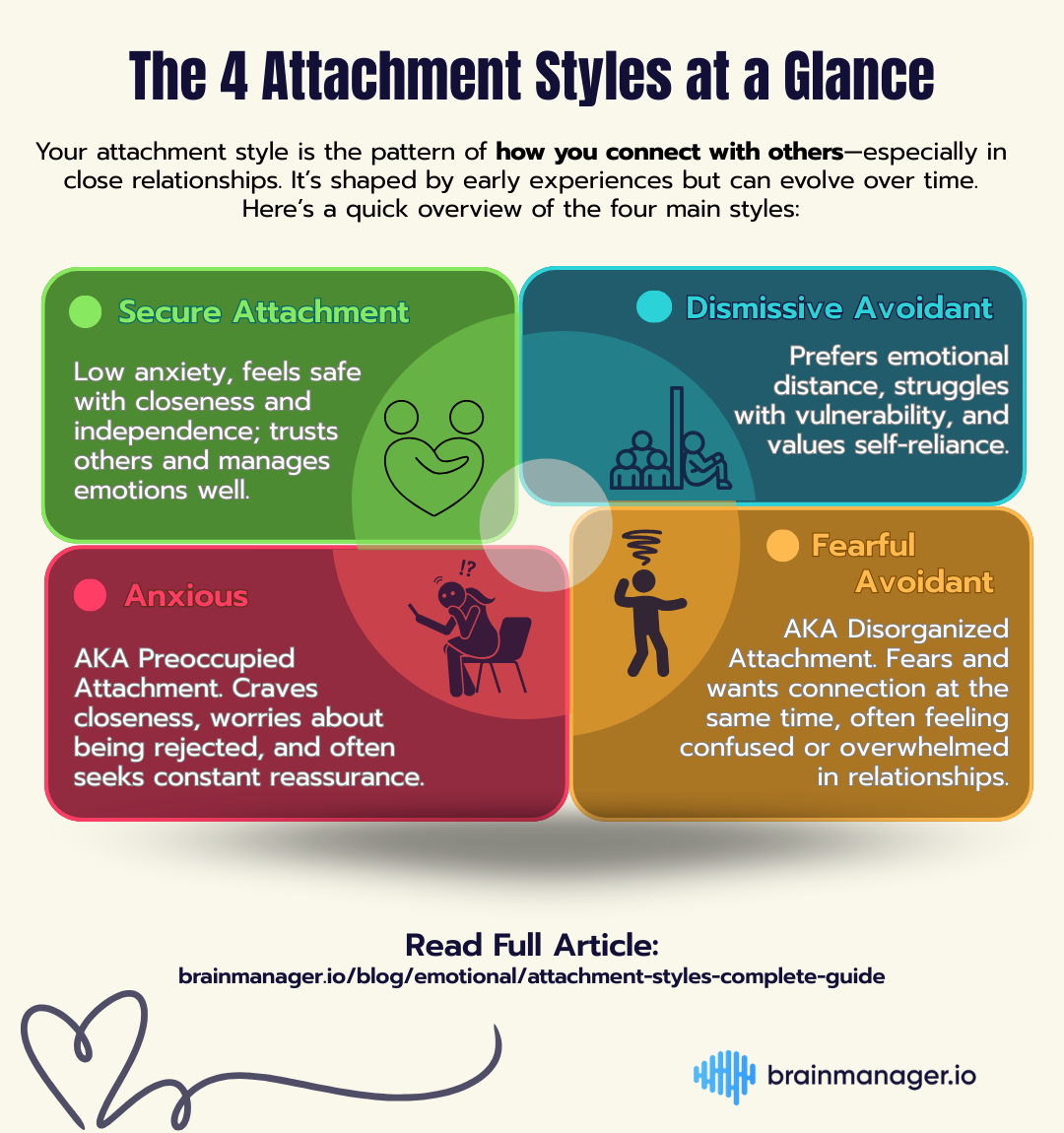
Alongside secure attachment, there are three insecure styles: anxious, avoidant, and disorganized. Each reflects different beliefs about closeness, trust, and emotional safety.
-
Anxious attachment (anxious-preoccupied attachment): An anxiously attached individual craves closeness but worries it won’t last, fearing abandonment.
-
Avoidant attachment (aka dismissive attachment): Someone with dismissive attachment values independence above all, often downplaying the importance of close bonds.
-
Disorganized attachment (fearful-avoidant ): A person with a fearful-avoidant or disorganized attachment displays unpredictable, often intense reactions as they find themselves caught between approach and avoidance.
Securely attached adults, in contrast, navigate relationships with calm confidence and emotional clarity—a balance that’s often missing in insecure styles.
7 Signs of a Secure Attachment Style in Adults
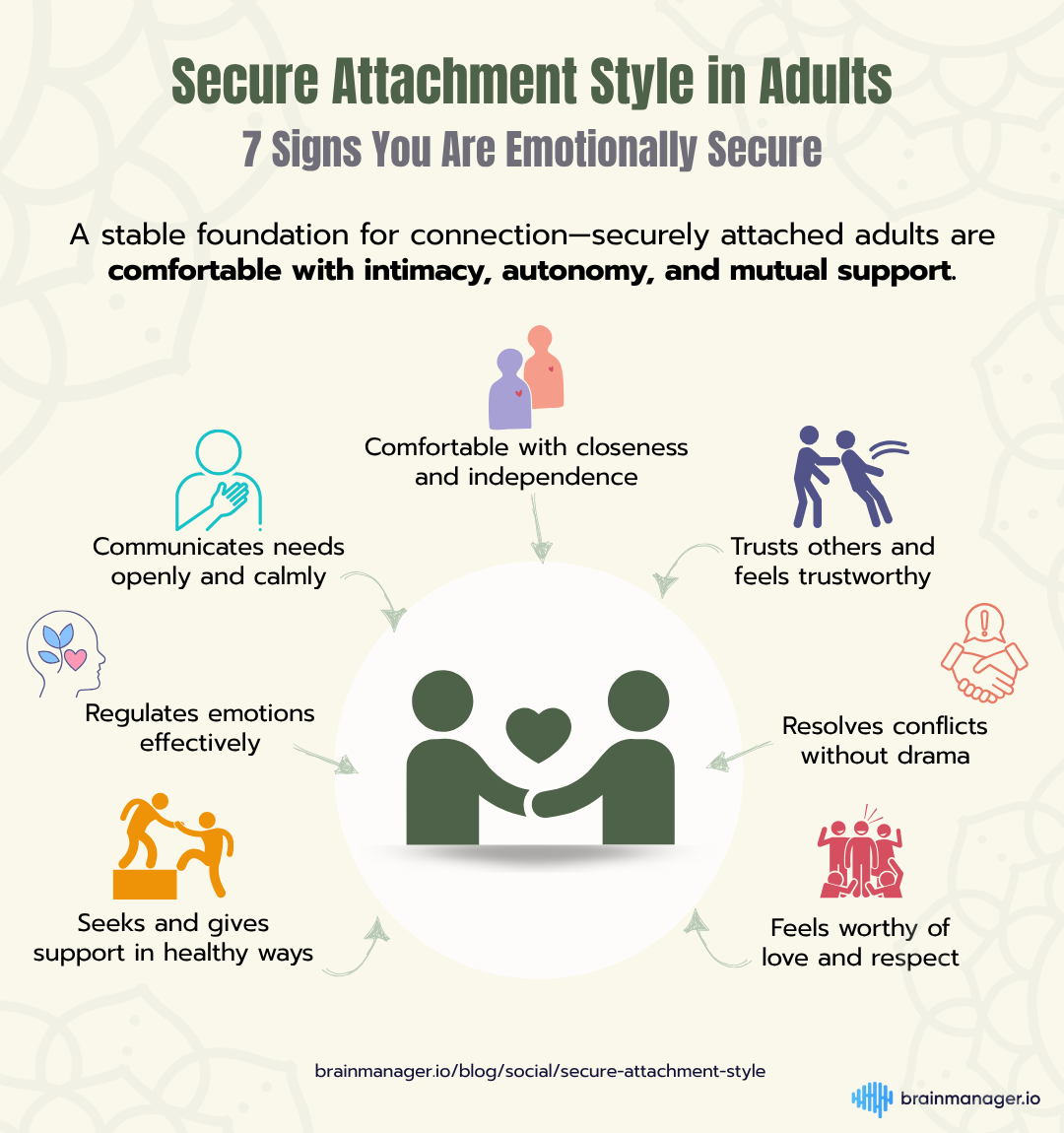
Secure attachment in adults can look different depending on personality and life experience. Still, these seven traits are consistently found in securely attached individuals—and they show what emotional safety and healthy connection look like in real life.
1. Mutual Support Without Scorekeeping
Securely attached people give and receive help freely, without guilt, obligation, or keeping tabs.
Securely attached adults don’t feel the need to earn support—or keep a mental tally of favors. They offer help because they care, and they’re comfortable asking for it when they need to. If you can give and receive without guilt or strings attached, that’s a sign of secure attachment. The underlying belief is simple but powerful: We’re in this together.
What this looks like in real life: Jamie had barely taken off her coat when she saw the laundry folded on the bed. “You’ve had a week,” Alex said. “I figured I’d take a few things off your plate.” She smiled and made a mental note to grab his favorite takeout on Friday—no obligation, just partnership.
2. Emotional Openness During Difficult Moments
Securely attached people stay emotionally accessible—even when things feel tense or uncertain.
Instead of shutting down or lashing out when upset, securely attached individuals express their emotions calmly and directly. They don’t pretend everything’s fine, but they don’t let stress spiral into distance or distrust, either. When conflict arises, they stay present and open rather than withdrawing.
What this looks like in real life: “I know I’ve been distant lately,” Leah said over coffee. “It’s not about you—I’ve just been feeling overwhelmed.” Her friend didn’t get defensive or brush it off. She just reached across the table and said, “Thanks for telling me. I’m here.”
3. Clear Communication of Needs
Securely attached people express what they need without fear, guilt, or emotional buildup.
Instead of bottling things up, dropping vague hints, or guilt-tripping, they speak clearly—whether asking for space, support, or connection. They trust the relationship is strong enough to handle directness. And they believe their needs matter, too.
What this looks like in real life: “I really want to do a good job on this,” Marcus told his team lead. “Would it be okay if I had until Monday instead of Friday?” He didn’t apologize or overexplain. Just asked. And she nodded without hesitation.
4. Balance Between Closeness and Independence
Securely attached people feel comfortable being close without losing themselves.
They enjoy intimacy but also make space for personal goals, friendships, and downtime—without guilt or fear of disconnection. If you can spend time alone without it threatening the bond—or share closeness without feeling trapped—that's a strong sign of secure attachment.
What this looks like in real life: On Sunday, Maya went to a pottery class by herself. Her partner stayed home watching the game. They texted each other photos: her clay mess, his nachos. No drama, no guilt. Just two people with space to be themselves.
5. Optimistic Outlook on Life
Securely attached people tend to assume the best instead of jumping to conclusions.
When someone is late, distracted, or unresponsive, they don’t spiral into self-blame or suspicion. If you can pause, stay grounded, and trust there’s a reasonable explanation, it shows a secure foundation in how you relate to others. People who are emotionally secure tend to have optimistic personalities.
What this looks like in real life: When his sister didn’t text back for three days, Aaron didn’t spiral. He just sent a check-in: “Hey, hope you’re good. No rush—just thinking of you.” She called later and thanked him for not making it weird.
6. Handle Conflict Without Drama
Securely attached people see conflict as something to work through—not something to fear, avoid, or escalate.
If you can handle disagreements without spiraling, shutting down, or assigning blame, that’s a strong sign of secure attachment. Fights don’t mean failure. Instead, securely attached adults stay present, listen actively, and look for mutual understanding.
What this looks like in real life: “I should’ve asked before inviting people over last night,” Jordan said. “I totally get why you were frustrated.” His roommate nodded. “I just needed a heads-up.” They both shrugged, then moved on—no yelling, no grudge.
7. Confidence in Their Worth
People with a secure attachment style know they are worthy of love and respect.
At the heart of secure attachment is a quiet belief: I am enough. Securely attached adults don’t depend on others’ moods or approval to feel valuable. That doesn’t mean they never feel insecure. It just means their self-worth is steady, even in moments of doubt.
What this looks like in real life: They went on a great date—and then she didn’t hear from him for a few days. Instead of spiraling, she made plans with friends and kept living her life. “If he’s not into me, that’s okay,” she thought. “I still like who I am.”
Together, these traits form the foundation of emotionally secure relationships—marked by trust, healthy boundaries, and mutual support.
How Attachment Theory Helps Us Understand Attachment Security
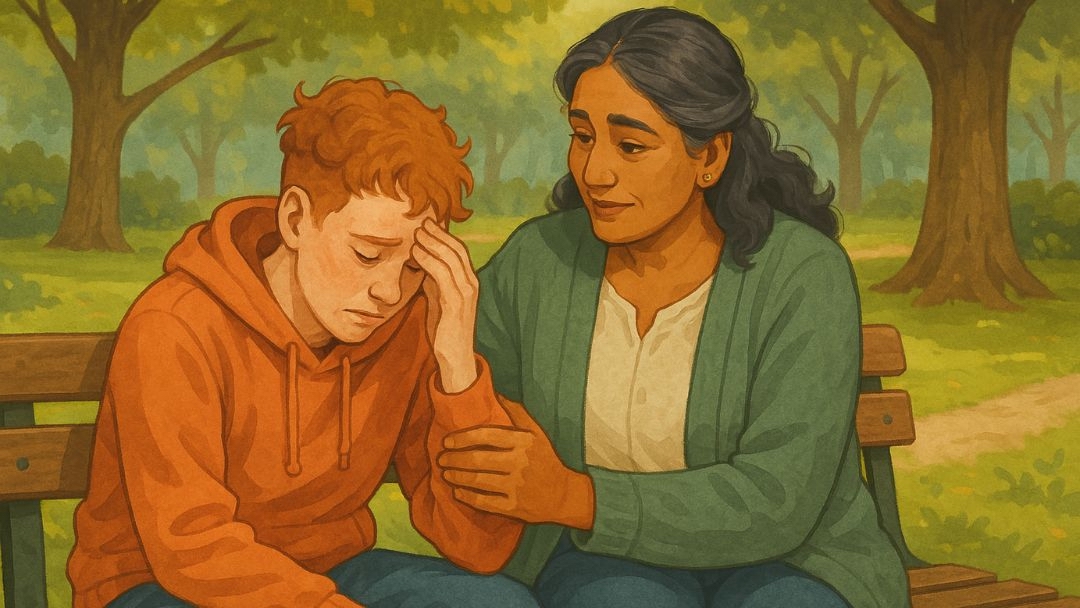
Attachment theory originated with John Bowlby’s observation that infants form a deep, enduring emotional bond with their primary caregiver. As it turns out, that bond shapes expectations about safety, support, and exploration throughout life.
In adults, secure attachment reflects an internal working model in which relationships are seen as reliable, nurturing, and responsive.
In less academic terms, it means you feel safe enough to be yourself and grow as an individual while also knowing that "important someone" will be there to help you if you stumble—or simply want to share your successes, no matter how you define them.
The bottom line? Secure attachment feels like having a warm safety net under your relationship—one that propels you into new experiences without the dread of landing flat on your face.
Why Secure Attachment Matters for Healthy Relationships and Well-Being

In the 1980s, when Hazan and Shaver conducted their research on attachment theory, over half of the US population had a secure attachment style. Nonetheless, more recent findings indicate a drop in these numbers, with less than a third of securely attached individuals.
Because secure attachment benefits both relationships and overall well-being, it’s worth striving for an earned secure attachment.
Studies, including one from 2019, link secure attachment to broad benefits in all areas of life.
1. Secure Attachment Leads to Healthier, More Fulfilling Relationships.
Securely attached adults tend to build close, emotionally safe connections in various areas of life. They:
2. Secure Attachment Strengthens Overall Well-Being.
Secure attachment is linked to all dimensions of wellness:
- Physical
- Emotional
- Social
- Intellectual
- Spiritual
- Occupational
- Environmental
- Financial
Because securely attached people feel worthy and capable of managing life, they’re more likely to thrive emotionally, professionally, physically, and spiritually—even in the face of challenges.
3. Secure Attachment Builds Confidence and Resilience in Work and Social Settings.
In the workplace and broader social networks, securely attached people are not weighed down by the need to prove themselves or avoid vulnerability. Because of that, they tend to:
This kind of grounded confidence allows them to build strong, respectful connections—both personally and professionally—without sacrificing authenticity.
Can You Develop Secure Attachment in Adulthood?
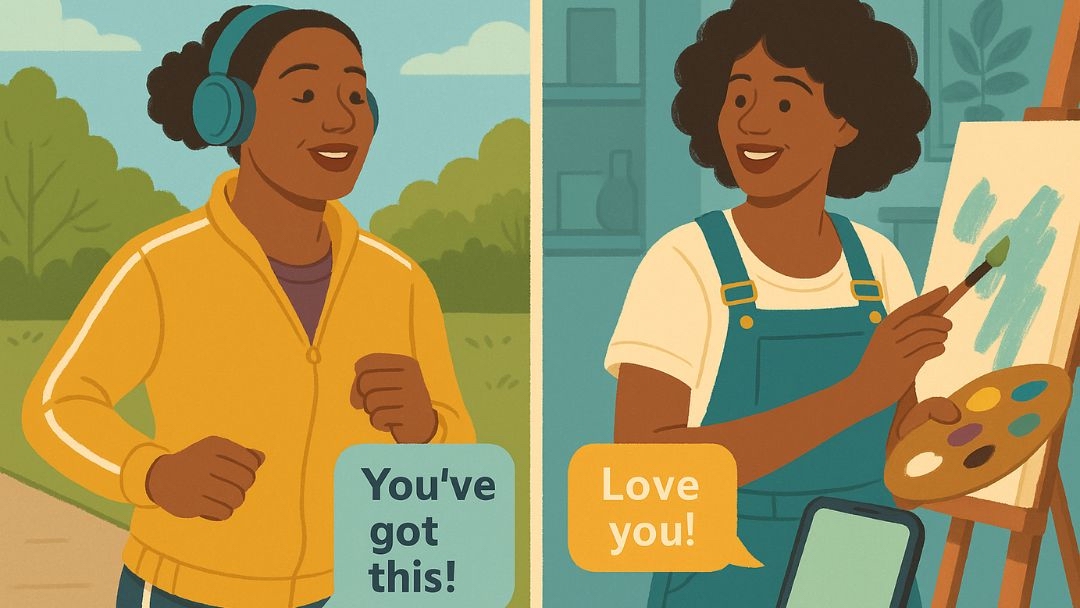
Yes, you can. Secure attachment isn’t fixed at birth—it can be developed through intentional effort, self-reflection, and the right support. Even if you don’t recognize yourself in descriptions of a securely attached adult—whether you never had it or lost it due to trauma or past experiences—these benefits make it well worth the effort.
With time and guidance, it’s possible to create emotionally secure relationships and rewire your patterns for connection and trust. What you need is:
These are not quick fixes—but with consistency, they can help you build a more secure way of relating, one grounded in self-worth, emotional safety, and healthier relationship patterns.
Myths About Secure Attachment
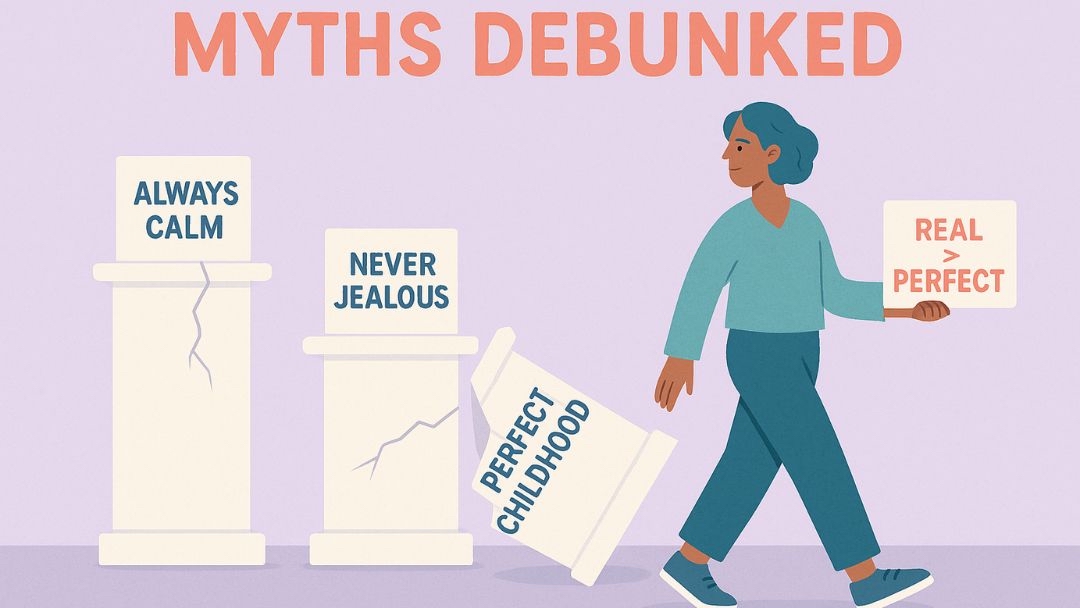
Before we conclude our conversation about the world of secure attachment, let’s debunk a few myths about it. People sometimes assume that a secure attachment style equals being passive, boring, overly dependent, or reserved and is only for the lucky few.
These common misconceptions simply aren’t true:
- “Secure people never fight.”
- “You can’t develop security later in life.”
- “Secure people are always calm.”
- “You need a perfect childhood to be secure.”
- “Secure attachment means never feeling jealous.”
In reality, secure attachment isn’t about perfection or having a flawless early childhood—it’s about how we relate, recover, and reconnect. Understanding what it isn’t helps us better appreciate what it truly offers: grounded, resilient, and fully human connection.
Developing Secure Attachment—A Step Towards Fulfilling Adult Relationships
In your future relationships, your awareness of your own feelings and relationship patterns will be the greatest gift you can give yourself and those you love. One of the insights that will help you deepen your emotional connection is understanding how you and your partner express and receive affection—often through different love languages. When paired with secure attachment, this awareness nurtures both intimacy and trust.
Just as an attachment figure in early interactions shapes infant mental health and a child’s emotional regulation, the way you show up today promotes secure attachment for both your children and your romantic relationships. Securely attached children tend to form healthy relationships and grow into adults who can balance both intimacy and autonomy, effectively utilize conflict resolution skills, and create a lasting emotional connection.
Secure attachment fosters healthy coping mechanisms, as opposed to insecure attachment patterns such as ambivalent attachment or avoidant attachment styles, and encourages seeking emotional support without fear.
Over time, secure attachment develops higher self-esteem (positive self-esteem, not toxic perfectionism) by reinforcing that you’re worthy of love and care.
When you commit to developing secure attachment—through empathy, consistency, and open communication—you’re not just healing old patterns. You’re shaping future ones. You’re creating a foundation where love feels safe, closeness doesn’t cost you your autonomy, and connection becomes a source of strength, not stress.
And that—slowly, steadily—is how secure love begins to feel like home.